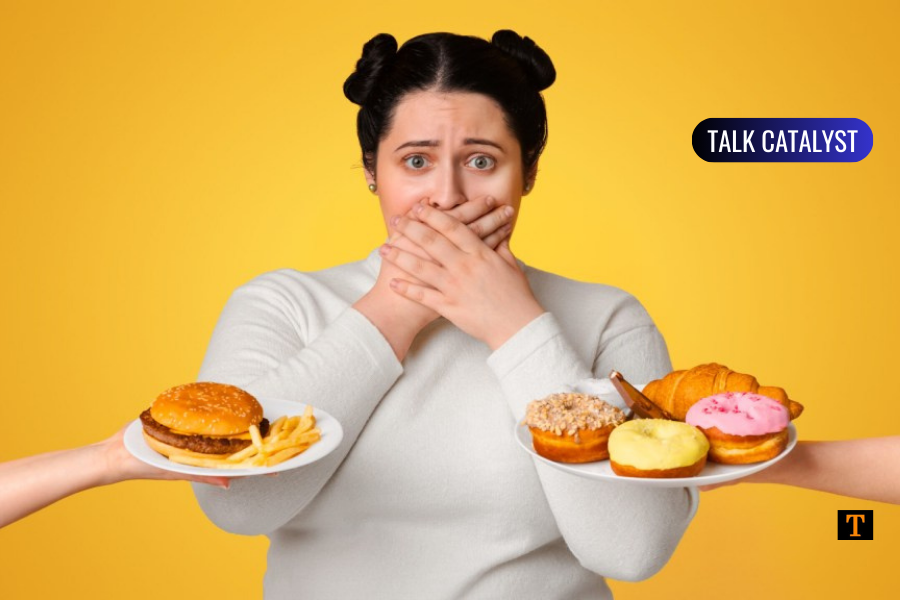
Your brain’s been kidnapped. Emotional eating can be described as the act of utilizing food to cope with and deal with emotions rather than relying on food for nutritional needs because your body requires food to sustain you physically when you need to eat. Eating can provide comfort and relief during times of stress and sadness, but unfortunately most of the time this response is developed without a conscious awareness of what your body actually needs to sustain itself.
Most everyone will have an experience of engaging in emotional eating at some point in their life due to other people’s expectations or stress from work, or life challenges, or boredom or due to being tired/malnourished or any number of things causing them to want to eat because they want something to comfort them temporarily. While food can take our mind off mental stress and relieve mental stress, often people experience mental stress after eating because food did not resolve the actual cause of their emotional distress.
Studies based on nutrition and behavioural health show that our emotions can impact our eating habits. Stress hormones and tiredness can lead to cravings for food, and generally for foods that are high in fat/salt/sugar. Eating high fat/sugar/salt foods can create pleasure in the brain – hence why sugary/fatty/salty foods would generally be eaten in times of heightened emotional distress.

A good first step to learning how to manage emotional eating will be to become more aware of your emotions and how those emotions affect your behaviours. If you are able to stop and question your internal need to eat, you may find that you aren’t as hungry as you perceive.
Relax and Breathe
Eating due to stress is a way to express the same feeling as someone who feels good. Eating without thinking, then regretting it is a terrible feeling. You will have done something by impulse; therefore, you cannot know that you have done, and you will not be able to feel satisfied. Your own toolkit can be used to help you learn to stop the habit of eating for emotional reasons. Every person has a different level of stress, so the toolkit for each individual will be different. The toolkit that works best for you should help you get back into control of your life; however, this is not usually something that happens overnight.

Exercise
The body can accumulate stress just as the mind can. The more a person experiences stress, the more tension the body holds; for example, muscles may tighten as the body endures pressure over time. Additionally, shallow breathing may develop, leading to an ongoing state of physical tension without awareness by the person affected; therefore, physical tension is likely to make an individual feel overwhelmed or emotionally fatigued. One of the best ways to alleviate tension in your body is through focused breathing (a technique widely encouraged by health/wellness providers); short periods of focused breathing can assist your body in transitioning from a state of stress to one of calmness. A one-minute focused breathing period can be taken anywhere, at any time. To do so, sit in a comfortable position with your back straight and shoulders relaxed. If it’s possible, close your eyes so you’re not distracted by anything in your environment. Next, place your hand on your chest (to feel your heartbeat), and inhale through your nose while filling your lungs with air. Finally, exhale through your mouth. Once you begin to engage in focused breathing, pay attention to the movement (in and out) of the air through your nose and the rhythmic motion of your heart. You will be able to observe how/when you are able to relax physically and mentally after you have engaged in this technique.
In general, exercising can diminish negative feelings associated with stress. Exercise causes your body to release a chemical classified as an endorphin; as a result of exercising, the endorphins you release will relieve pain, in addition to then reducing stress and tension. Exercising doesn’t have to be just vigorous workouts; it can also include less intense activities such as mediation, massage, leisurely walking, running or doing yoga. These activities will leave you more energized while also decreasing levels of stress.
Social Support
Connecting with a person you know or who you’re comfortable with can do wonders for you. The right support from family or friends can significantly reduce your stress. Family can lend you advice, make you laugh, and serve as a sounding board and can help you greatly. If you need someone to talk to, don’t hesitate to pick up the phone and call someone; that little act may improve your mental well-being. You’ll do better if you have good social support around you!

Listening to Music
Allow music to take you away. Music is one way to elevate your mood, because it can have such a strong influence on feelings and emotions. Fortunately for us, there are countless styles and types of music available to use as stress relievers; in fact, each has different effects on our bodies. As you begin to discover the music style that fits your particular tastes, don’t forget to “play that funky music” from the ’70s and simply allow all of your worries to fade away. If you want, feel free to sing along with the song; singing is also a very effective way to relieve stress. Given how simple it is to use music as a means of relieving stress, you really should take advantage of it!
Write
Writing about any problems can really help to clear your mind and provide you with great insight into how to get through those issues!
This is the same as checking in with yourself. By thinking through the situation and expressing your feelings about the event or situation, you will be better able to manage your thoughts and emotions, and this decreases the chances of you overeating in the future.
When you have a few basic notes written down about what is bothering you (really get to the heart of the matter), you will find that the problem will begin to resolve itself in your mind. You will now start looking for ways to fix the problem, rather than relying on food again!
Also Read: 5 Easy Homemade Ayurvedic Tonics for a Calm Stomach
Finding the strategies that work for you is the most important part when dealing with emotional eating but you’ve already done that. Now find out how you can best use those strategies; be creative and do not restrict yourself in any manner. Take your time with all things that help you handle stress in YOUR way.